

Omron Blood Pressure Machine Manual: A Comprehensive Guide
Omron healthcare provides clinically validated, user-friendly blood pressure monitors, including Series 3, 5, and 10, aiding in proactive heart health management at home.
Understanding Omron Blood Pressure Monitors
Omron blood pressure monitors are designed for accurate, at-home health tracking, empowering individuals to proactively manage cardiovascular well-being. These devices utilize oscillometric technology, measuring blood pressure by detecting oscillations in artery walls during inflation and deflation of the cuff.
Recognized by healthcare professionals, Omron offers a range of models – upper arm and wrist – catering to diverse preferences. Clinically validated for accuracy, these monitors provide reliable readings, crucial for identifying potential hypertension or hypotension. Consistent monitoring, coupled with lifestyle adjustments, supports informed healthcare decisions and improved heart health outcomes.
Types of Omron Blood Pressure Monitors
Omron offers diverse blood pressure monitors to suit individual needs. Upper arm monitors, like the Series 3, 5, and 10, are generally considered more accurate due to their proximity to the heart and are widely recommended by doctors.
Wrist blood pressure monitors provide convenience and portability, ideal for travel or those with limited arm mobility. However, proper positioning is crucial for accurate readings with wrist models. The Omron 10 Series uniquely incorporates AFib detection, offering an advanced cardiovascular health screening feature during standard measurements.
Upper Arm Monitors: Series 3, 5, and 10
Omron’s upper arm monitors – Series 3, 5, and 10 – are renowned for accuracy and reliability. The Series 3 provides dependable measurements, while the Series 5 adds Bluetooth connectivity for data tracking via the Omron Connect app and boasts a 100-reading memory.
The advanced Series 10 builds upon these features, incorporating an AFib detection capability, allowing users to screen for atrial fibrillation during routine blood pressure checks. All series utilize a soft, wide-range cuff for comfortable and precise readings.
Wrist Blood Pressure Monitors
Omron offers convenient wrist blood pressure monitors, ideal for portability and ease of use. These devices provide accurate readings from the wrist, making them suitable for individuals on the go. While generally compact, proper positioning is crucial for reliable results.
Omron wrist monitors often feature Bluetooth connectivity, allowing seamless data synchronization with the Omron Connect app for tracking trends and sharing information with healthcare professionals. They are a practical option for regular blood pressure monitoring outside of a traditional setting.
Preparing for a Blood Pressure Measurement
Accurate blood pressure readings depend on proper preparation. Before measurement, rest quietly for five minutes, avoiding caffeine, exercise, and smoking. Ensure your bladder is empty. Correct cuff size is vital; an ill-fitting cuff leads to inaccurate results.
Proper positioning is also key – sit with your back supported, feet flat on the floor, and your arm supported at heart level. Avoid crossing your legs or talking during the measurement. Following these steps ensures reliable data for effective health monitoring.
Correct Cuff Size Selection
Choosing the right cuff size is paramount for accurate blood pressure readings. Omron monitors often include a cuff that fits standard arm circumferences, but additional sizes are available. Measure your arm’s circumference midway between your elbow and shoulder.
If the measurement falls within the specified range for a small or large cuff, use that size. An incorrectly sized cuff – too small or too large – can significantly distort readings, leading to misdiagnosis or ineffective treatment. Always refer to the manual for specific sizing guidance.
Proper Positioning and Posture
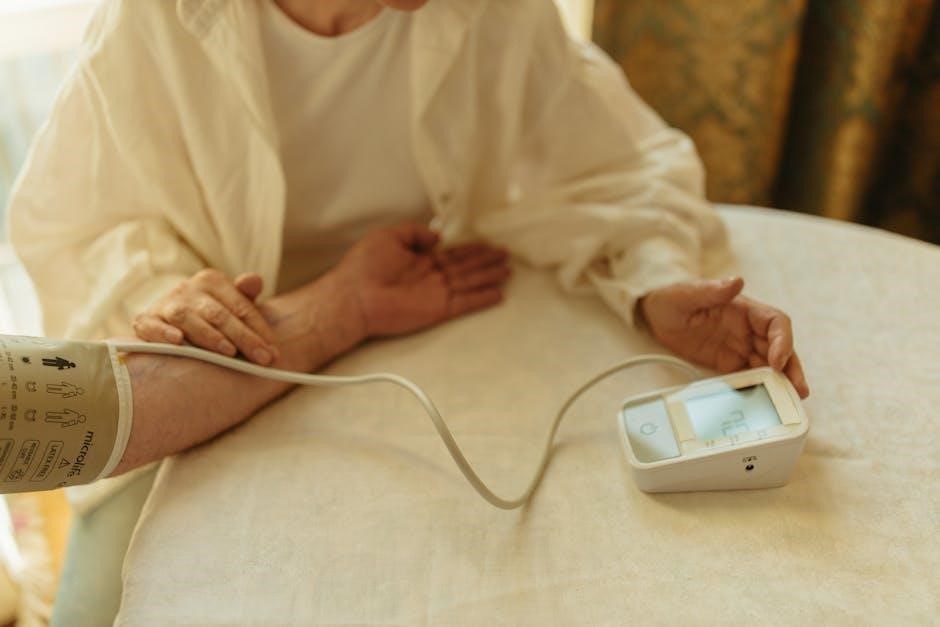
Ensuring correct positioning is crucial for reliable blood pressure measurements; Sit comfortably with your back supported and feet flat on the floor. Avoid crossing your legs, as this can elevate blood pressure. Your arm should be supported at heart level – use a pillow if needed.
Remain still and quiet during the measurement process. Talking or moving can artificially inflate readings. Relax your arm and avoid tensing muscles. Proper posture minimizes interference and provides a more accurate reflection of your true blood pressure.
Using Your Omron Blood Pressure Monitor: Step-by-Step
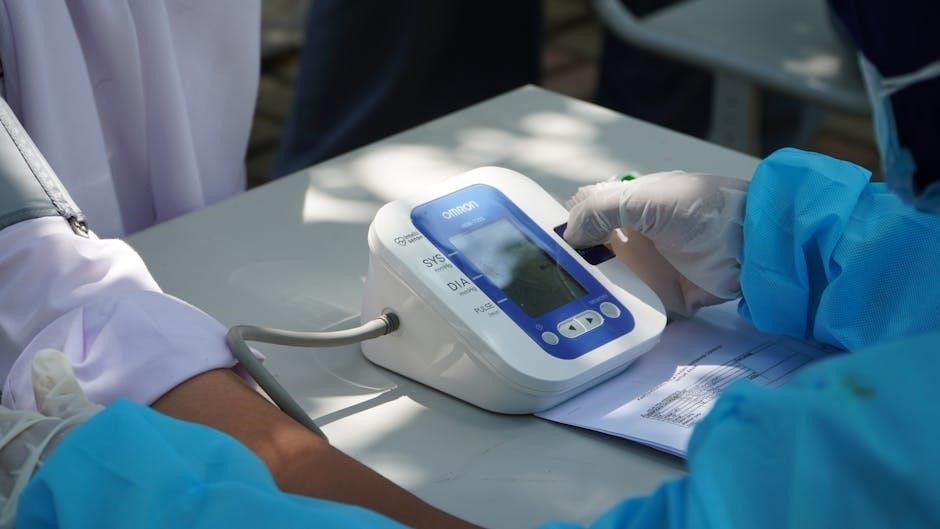
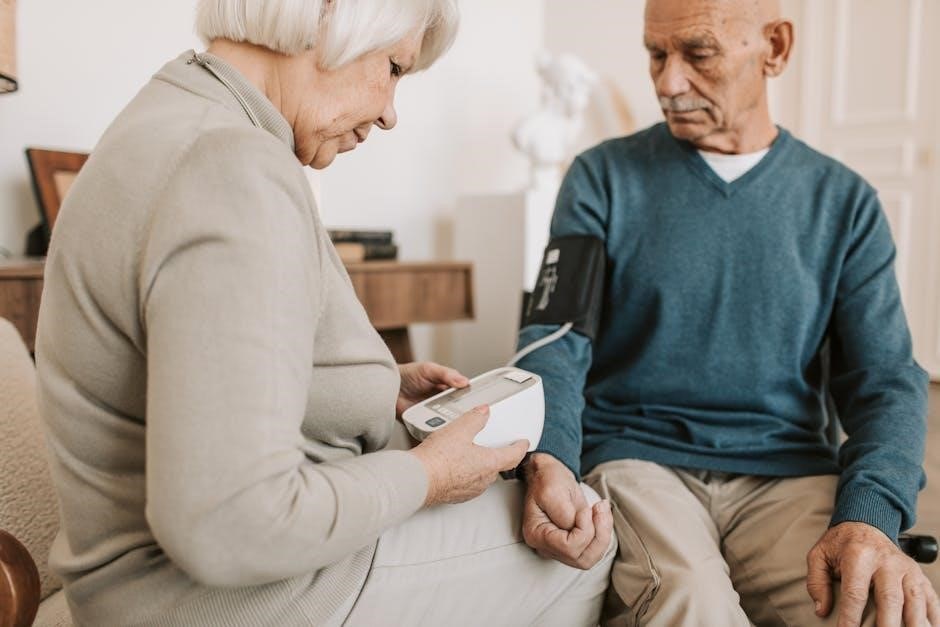
First, attach the correct cuff size to your upper arm, ensuring the artery marker aligns with your brachial artery. Power on the monitor and select your user profile if applicable. Remain still and press the ‘Start’ button.
The cuff will inflate automatically, and the monitor will display your systolic and diastolic readings, along with your pulse rate. Avoid talking or moving during inflation and deflation. Once complete, record your results and repeat if desired.
Attaching the Cuff Correctly
Ensure the cuff is positioned on your bare upper arm, approximately one inch above your elbow. The artery marker on the cuff should align with your brachial artery. Wrap the cuff snugly, but not too tightly – you should be able to slide one finger underneath the edge.
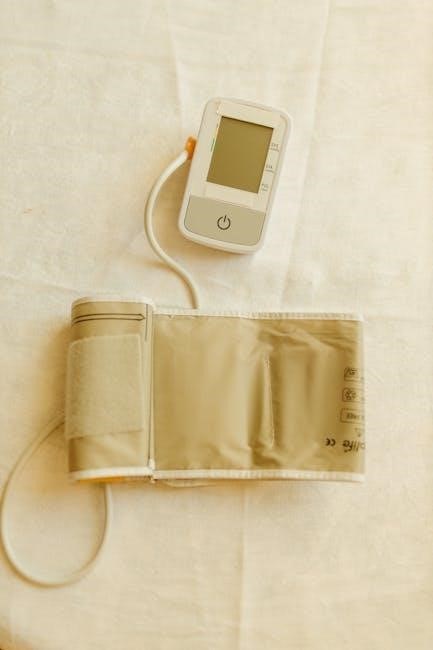
Select the appropriate cuff size for your arm circumference; using the wrong size impacts accuracy. Avoid positioning the cuff over clothing. Secure the cuff firmly with Velcro, ensuring it remains stable during measurement.
Starting and Stopping the Measurement
Press the “Start” button to initiate the measurement; remain still and silent throughout the process. The cuff will inflate automatically, and the monitor will display your readings. Avoid talking, moving, or crossing your legs during inflation and deflation.
The monitor will automatically deflate and display your systolic, diastolic, and pulse rate. Record your results for tracking and sharing with your healthcare provider. Press the “Stop” button only if necessary to halt the measurement prematurely.
Interpreting Your Blood Pressure Readings
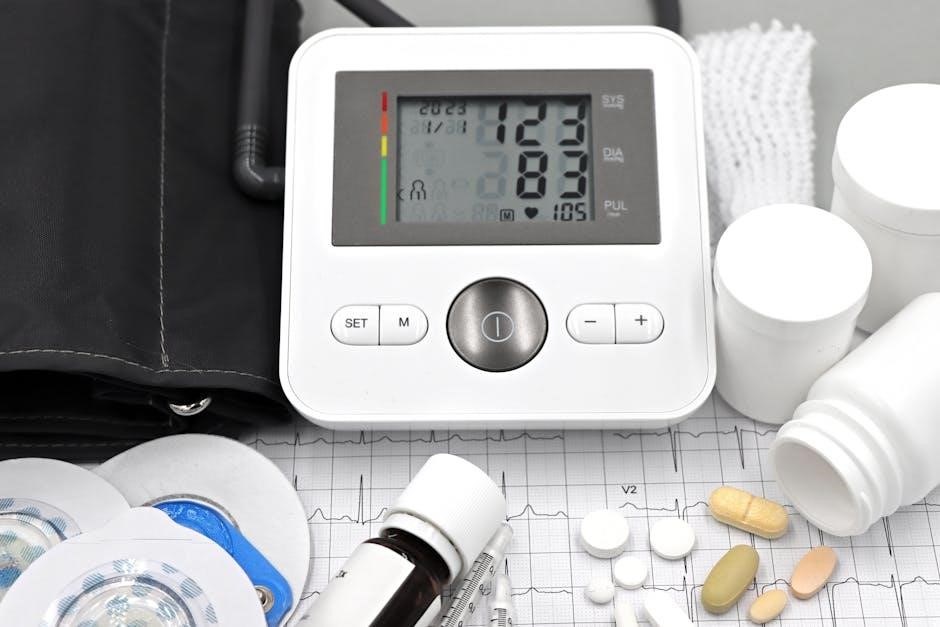
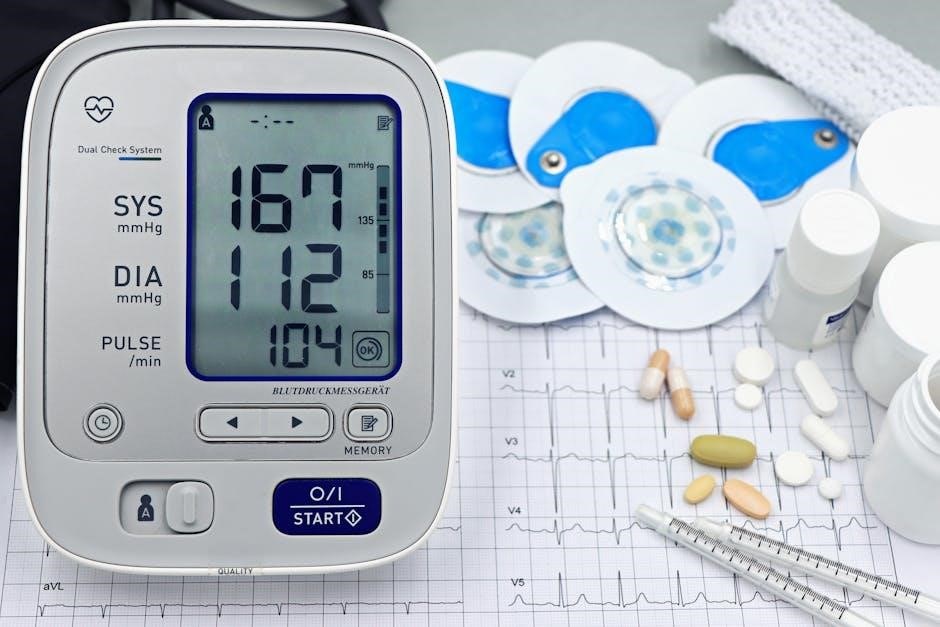
Blood pressure readings consist of two numbers: systolic (top number) representing pressure during heartbeats, and diastolic (bottom number) indicating pressure between beats. Understanding these values is crucial for assessing cardiovascular health. Normal blood pressure is generally considered below 120/80 mmHg.
Elevated readings require attention, and consistently high numbers may indicate hypertension. Consult your doctor to interpret your readings accurately and determine appropriate lifestyle changes or medical interventions. Regular monitoring and professional guidance are key to managing blood pressure effectively.

Systolic and Diastolic Numbers Explained
Systolic pressure, the higher value, measures force when your heart beats, pushing blood through arteries. Diastolic pressure, the lower value, reflects the pressure in arteries when your heart rests between beats. Both numbers are vital for a complete assessment.
A healthy systolic reading is typically under 120 mmHg, while a healthy diastolic is under 80 mmHg. Changes in either number can indicate cardiovascular health status. Monitoring both consistently provides a comprehensive view, aiding in early detection of potential issues.
Understanding Blood Pressure Categories
Blood pressure categories range from Normal (less than 120/80 mmHg) to Elevated (120-129/less than 80 mmHg). Hypertension is divided into Stage 1 (130-139/80-89 mmHg) and Stage 2 (140/90 mmHg or higher). Hypertensive crisis requires immediate medical attention.
Regular monitoring with your Omron device helps track your category. Consistent readings outside the normal range warrant discussion with your doctor. Understanding these categories empowers proactive health management and informed conversations with healthcare professionals.
Omron Monitor Features and Functions
Omron blood pressure monitors boast several key features enhancing user experience and data management. Memory function stores previous readings for tracking trends, with some models holding up to 100 readings. Bluetooth connectivity, available in Series 5 and beyond, enables seamless data transfer to the Omron Connect app.
This app facilitates data analysis and sharing with physicians. Advanced models, like the 10 Series, offer AFib detection. These features empower users to actively participate in their heart health monitoring.
Memory Function and Data Storage
Omron blood pressure monitors effectively store historical readings, enabling users to track fluctuations over time. Many models, such as the 5 Series, offer a 100-reading memory capacity, accommodating multiple users with individual profiles. This feature is invaluable for identifying patterns and providing comprehensive data to healthcare professionals.
Stored data typically includes systolic and diastolic pressures, pulse rate, and date/time stamps. Consistent monitoring and data review contribute to a more informed understanding of cardiovascular health.
Bluetooth Connectivity and App Integration
Omron’s advanced monitors, like the 5 Series (BP7255), feature Bluetooth wireless technology, seamlessly syncing data to the Omron Connect app. This integration allows for convenient data visualization, trend analysis, and secure sharing with physicians.
The app provides personalized insights, medication reminders, and facilitates remote monitoring. Data can also be exported for detailed review with healthcare providers, enhancing collaborative care and proactive health management. This connectivity empowers users to take control of their cardiovascular well-being.
Troubleshooting Common Issues
Omron monitors may display error messages; consult your manual for specific meanings. Inaccurate readings can stem from improper cuff placement, movement during measurement, or incorrect cuff size. Ensure the cuff is snug but not too tight, and remain still throughout the process.
If issues persist, replace batteries, verify correct monitor settings, and review the user manual. Contact Omron customer support if problems continue, providing the model number for efficient assistance. Regular calibration isn’t typically needed.
Error Messages and Their Meanings
Omron blood pressure monitors utilize error messages to indicate potential issues. An “Err” display often signals movement during measurement or a weak pulse. “Cuff Err” suggests improper cuff connection or inflation. An “Arry” message, found on Series 10, indicates potential irregular heartbeat detection requiring further medical evaluation.
Consult your specific model’s manual for a comprehensive list and detailed explanations. Addressing the indicated issue – re-applying the cuff, remaining still – usually resolves the error. Persistent errors warrant contacting Omron support.
Inaccurate Readings: Causes and Solutions
Omron monitors, while accurate, can yield inconsistent readings due to several factors. Movement during measurement, an incorrectly sized cuff, or improper positioning are common culprits. Ensure a calm environment and follow cuff size guidelines.
Also, avoid caffeine or exercise before measuring. If readings remain erratic, check battery levels and consider recalibration if your model supports it; Consistent inaccuracies necessitate consulting a healthcare professional and potentially contacting Omron customer support.

Maintaining Your Omron Blood Pressure Monitor
Omron blood pressure monitors require minimal maintenance for optimal performance. Regularly clean the cuff and monitor body with a soft, damp cloth – avoid harsh chemicals. Store the device in a cool, dry place, away from direct sunlight and extreme temperatures.
Replace batteries promptly when the low battery indicator appears to ensure accurate readings. Proper storage and timely battery replacement contribute to the longevity and reliability of your Omron device, supporting consistent health monitoring.
Cleaning and Storage
Omron recommends cleaning your blood pressure monitor regularly with a soft, slightly damp cloth. Avoid using harsh chemicals or abrasive cleaners, as these can damage the device; The cuff can be gently hand-washed with mild soap and water, ensuring it’s completely dry before reattaching.
For storage, keep the monitor in a cool, dry location, protected from direct sunlight and extreme temperatures. Proper cleaning and storage will help maintain accuracy and extend the lifespan of your Omron monitor.
Battery Replacement
Omron blood pressure monitors typically require standard AA or AAA batteries. When the low battery indicator appears on the display, promptly replace all batteries at once with new ones of the same type. Do not mix old and new batteries, or different battery types.
Ensure correct polarity when inserting the batteries. Remove batteries if the monitor will not be used for an extended period to prevent potential damage from leakage. Proper battery maintenance ensures consistent and reliable readings from your Omron device.
Omron Series Specific Manuals & Guides
Omron offers dedicated manuals for each monitor series, providing tailored instructions. The Omron 3 Series manual details reliable blood pressure measurement features. The Omron 5 Series guide explains Bluetooth connectivity and data storage. For advanced users, the Omron 10 Series manual focuses on AFib detection capabilities;
Accessing these series-specific guides ensures you fully understand your monitor’s functionalities. Downloadable PDFs are available on the Omron Healthcare website, offering detailed explanations and troubleshooting tips for optimal use.
Omron 3 Series Manual Overview

The Omron 3 Series manual emphasizes its reliability for consistent and precise blood pressure readings. It details how the monitor measures five times more data points than other models, enhancing accuracy. The guide explains cuff attachment, measurement procedures, and interpreting results, including systolic and diastolic values.
Users will find instructions on memory function usage and troubleshooting common issues. Omron prioritizes simplicity, making the 3 Series ideal for straightforward home monitoring, as highlighted in the comprehensive manual.
Omron 5 Series Manual Overview
The Omron 5 Series manual details the monitor’s Bluetooth capabilities, enabling wireless synchronization with the Omron Connect app for data tracking. It guides users through setting up two-user profiles and utilizing the 100-reading memory function. The manual stresses the clinical validation for accuracy and explains the large digital display for easy reading.
Troubleshooting sections address potential errors, while instructions cover proper cuff placement and measurement techniques. Omron emphasizes a comprehensive approach to heart health monitoring with this series.
Omron 10 Series Manual Overview: AFib Detection
The Omron 10 Series manual focuses on its innovative AFib detection feature, explaining how a single blood pressure measurement can screen for atrial fibrillation. It details the clinical validation of this technology and clarifies the importance of consulting a physician for confirmed results.
The guide covers standard blood pressure monitoring functions alongside AFib insights, including data storage and Bluetooth connectivity via the Omron Connect app. Users learn to interpret AFib indicators and understand their implications for heart health.
Advanced Features: AFib Detection
Omron’s AFib detection technology, exclusive to the 10 Series, allows for simultaneous blood pressure and atrial fibrillation screening during a single measurement. This feature is clinically validated, providing users with an early indication of potential heart rhythm irregularities.
Understanding AFib is crucial; the manual explains its implications, emphasizing the need for professional diagnosis. The technology doesn’t diagnose but flags potential issues, prompting users to consult their doctor for further evaluation and appropriate care.
How Omron AFib Detection Works
Omron’s AFib detection utilizes advanced algorithms to analyze the blood pressure waveform during measurement. Unlike standard monitors, it captures a more detailed dataset, identifying subtle irregularities in the pulse that may indicate atrial fibrillation.
The 10 Series monitor assesses the variability in the time intervals between heartbeats. If irregular patterns consistent with AFib are detected, the user receives a notification. It’s important to note this is a screening tool, and confirmation requires a traditional ECG from a healthcare professional.
Understanding AFib and its Implications
Atrial fibrillation (AFib) is an irregular and often rapid heart rhythm that can lead to serious complications. These include stroke, heart failure, and other heart-related issues. Many individuals with AFib are unaware they have the condition, as symptoms can be mild or absent.
Early detection is crucial for effective management. Omron’s AFib detection feature provides a convenient initial screening, prompting users to consult their doctor for a definitive diagnosis and appropriate treatment plan, potentially reducing long-term health risks.
Data Analysis and Tracking
Omron monitors facilitate comprehensive data analysis through seamless connectivity. The Omron Connect app allows users to easily track blood pressure readings over time, identifying trends and patterns. This data visualization empowers individuals to better understand their cardiovascular health.
Furthermore, the app enables convenient data export, allowing users to share their blood pressure history with healthcare professionals for informed discussions and personalized treatment adjustments. Consistent tracking supports proactive health management and improved outcomes.
Using the Omron Connect App
The Omron Connect app seamlessly syncs with compatible blood pressure monitors via Bluetooth, automatically uploading readings for effortless tracking. Users can view historical data in clear graphs, identifying trends and potential concerns. The app allows for multiple user profiles, ideal for family monitoring.
Personalized insights and medication reminders enhance adherence to treatment plans. Omron Connect also facilitates secure data sharing with physicians, promoting collaborative healthcare. It’s a powerful tool for proactive heart health management.
Exporting Data for Your Doctor
Omron Connect simplifies sharing your blood pressure data with your healthcare provider. The app allows you to generate a comprehensive report, encompassing readings, trends, and timestamps. This report can be conveniently exported as a PDF file.
You can then easily email the report directly to your doctor, facilitating informed discussions during appointments. This proactive approach to data sharing empowers collaborative healthcare and ensures your physician has a complete picture of your cardiovascular health.
Frequently Asked Questions (FAQ)
Q: Why is correct cuff size crucial? A: An improperly sized cuff leads to inaccurate readings. Too small inflates too tightly, while too large provides a weak signal.
Q: What if I get inconsistent readings? A: Ensure proper positioning, rest for five minutes beforehand, and avoid caffeine or smoking. If issues persist, consult your doctor.
Q: Can multiple users share one monitor? A: Omron monitors like the 5 Series often have multi-user memory, allowing separate profiles for accurate tracking.
Warranty Information and Support
Omron Healthcare provides a warranty on its blood pressure monitors, typically covering manufacturing defects for a specified period – check your product’s documentation for details. Warranty coverage doesn’t extend to normal wear and tear or misuse.
For support, visit the Omron Healthcare website for FAQs, troubleshooting guides, and downloadable manuals. You can also contact Omron Customer Support directly via phone or email; details are available on their website. Retain your proof of purchase for warranty claims.
Omron Warranty Details
Omron blood pressure monitors generally come with a limited warranty, often one year from the date of purchase, covering defects in materials and workmanship. This warranty doesn’t cover damage from accidents, misuse, or unauthorized repairs.
To make a claim, you’ll typically need to provide proof of purchase and a description of the defect. Omron may offer repair or replacement at their discretion. Extended warranties might be available for purchase separately. Always refer to the specific warranty card included with your device for complete terms.
Contacting Omron Customer Support
Omron offers multiple avenues for customer support. You can reach them via phone, typically during business hours, for immediate assistance with your blood pressure monitor. Their website, omronhealthcare.com, provides a comprehensive FAQ section and troubleshooting guides.
Additionally, Omron often has live chat support available online. For written inquiries, you can submit a request through their website’s contact form. Be prepared to provide your model number and a detailed description of your issue for efficient resolution.